

Be Ready for Future Pandemics
Be Ready for Future Pandemics
Build a strong, flexible research system that can quickly respond to new health threats affecting kids and pregnant people across Canada.



“Seeing the development of collaborations and synergy that would likely not have seen the light of day otherwise constitutes, in my eyes, one of the most concrete markers of success.”


“POPCORN is building on COVID-19 lessons to help prepare the Canadian child health community for whatever comes next.”

Build a strong, flexible research system that can quickly respond to new health threats affecting kids and pregnant people across Canada.

Focus on important health issues by using the strengths of children's hospitals and research networks to do reliable, science-based studies.
Make it easier for research teams, healthcare providers, families, and youth to team up on studies and clinical trials across different locations and specialties.

Involve people from all backgrounds and make sure everyone has a voice in research, especially those from underserved communities.
Give health experts and decision-makers up-to-date, accurate information to guide public health actions—especially during outbreaks.

If you're interested in learning about the specific data variables we're collecting for these POPCORN projects, please visit the Maelstrom website.

Co-developed with patient partners, a three-part POPCORN Patient Engagement Training Series was developed to equip researchers, research staff, and trainees with practical skills to meaningfully engage individuals with lived experience throughout the research process. This initiative emerged from a POPCORN network needs assessment completed in June 2023 in which 34% of respondents identified training in patient engagement as a major gap.
Building on this insight, patient and family partners co-led the design and development of the series — identifying key themes, shaping the content, and co-creating three connected sessions.
Aim: To "deconstruct" previous methods of patient engagement by utilizing anonymous stories from patient and family partners – highlighting both the positives and negatives.
Aim: Explore how communication between researchers and patient and family partners can be used as a tool for effective patient engagement.
Aim: Explore practical tools and strategies to strengthen patient engagement in research and apply key considerations for developing an effective engagement plan.
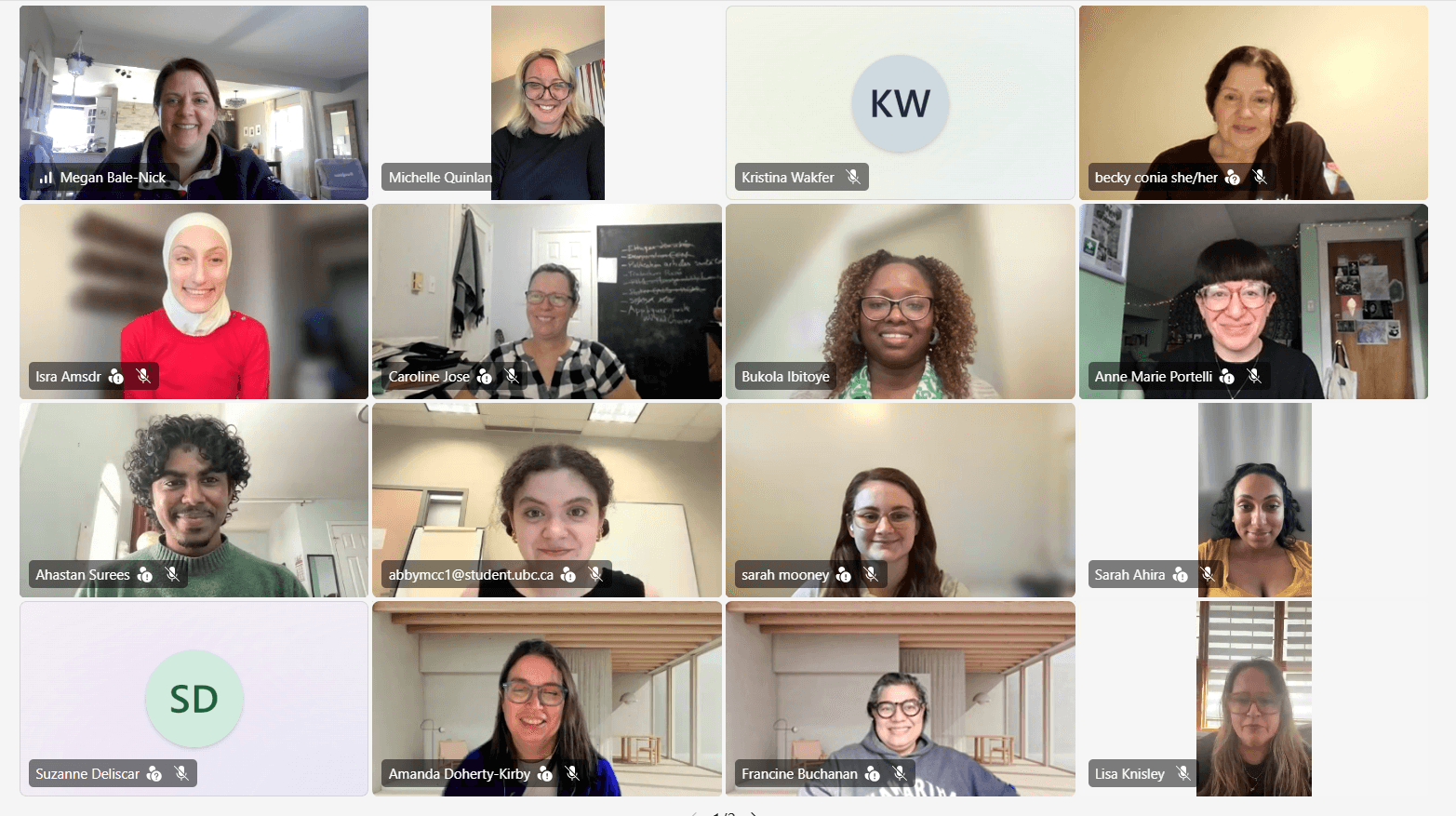
A debrief steering committee meeting was held in April 2026. Two papers are being drafted led by Bukola Ibitoye and Ahastan Surees (supported by patient partners) with an aim to submit for publication in late 2026, one of the papers will include evaluation metrics from the patient and family partners, researchers and trainees and webinar attendee evaluation metrics.
This series reflects POPCORN’s commitment to inclusive, collaborative, and meaningful patient & family partnerships.
Did you miss the sessions? You can access a training recording and participant guide here if you would like to complete each training module through self-study.
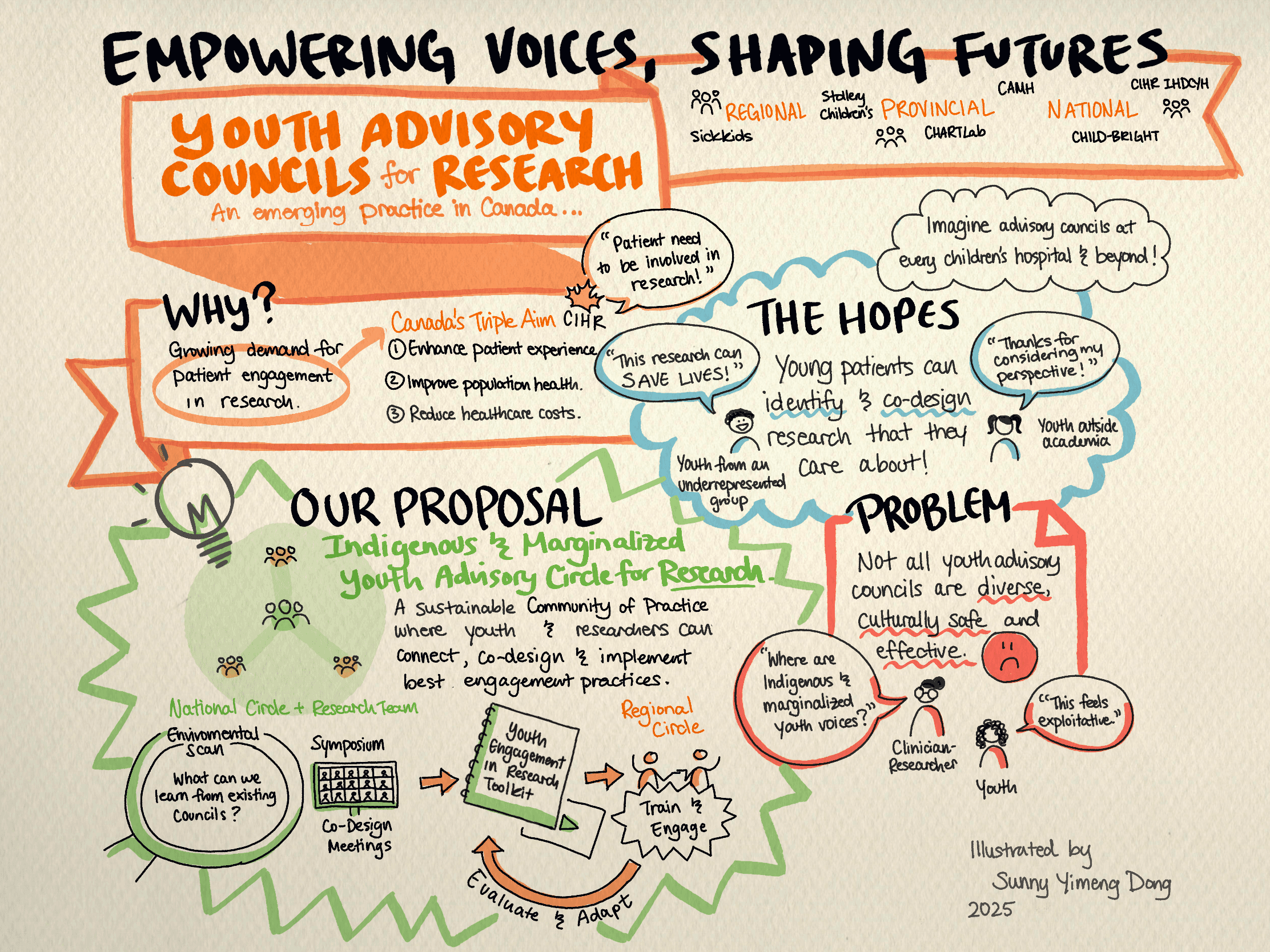
Network members are co-applicants on a newly funded CIHR Team Grant (2025–2030) titled Empowering Voices, Shaping Futures: Co-designing and Co-implementing a Toolkit with Youth from Indigenous and Diverse Backgrounds for Culturally Safe Engagement in Research. This national initiative brings together researchers, youth partners, caregivers, and community collaborators to co-develop and implement a toolkit that supports culturally safe and meaningful youth engagement in health research.
The project is co-led by principal applicants Amy Shawanda and Patricia Li and includes a diverse team of collaborators, including POPCORN youth and parent partners: Sarah Mooney, Sunny Dong, Becky Conia, and Robert Chin-See, along with community partners and multidisciplinary researchers from across Canada. The initiative will advance reconciliation by centering Indigenous youth perspectives in research and building capacity among youth from Indigenous and diverse backgrounds to lead research and advocacy aimed at improving healthcare experiences and outcomes.
This descriptive qualitative study, led by Kari Guo and supervised by Patricia Li and Ananya Banerjee, explored pediatricians' perspectives on accessing professional language interpretation services across 12 Canadian pediatric hospitals. Clinicians identified interpretation services as essential for delivering safe, high-quality, and equitable care to linguistically diverse children and families. However, persistent barriers were reported, including limited interpreter availability, time constraints in busy clinical settings, and a lack of standardized processes to identify families' language needs.
Findings highlight the need to strengthen institutional policies, training, and investment in professional interpretation services. Addressing these system-level barriers could improve communication, promote equitable care, and enhance health outcomes for linguistically diverse pediatric populations across Canada.
A virtual co-learning session on Language Inclusivity in Pediatric Research was delivered by Ananya Banerjee, Tiffany Kim, Maryam Parvez, and Patricia Li, with contributions from Vivian Qiang. The session brought together participants, including trainees, researchers, and collaborators, to explore strategies for more linguistically inclusive research practices.
Participants identified key challenges in designing equitable, linguistically responsive studies and learned practical strategies to improve communication and participation among linguistically diverse children and families. Through case examples and discussion, the session provided actionable approaches to reduce language-related barriers and strengthen equitable participation in pediatric research.

“Being part of the POPCORN network has advanced my professional development and provided numerous career opportunities. POPCORN's structure as a pan-Canadian research platform has facilitated collaboration with leading investigators, clinicians, and patient partners across multiple sites, research pillars, and disciplines. I've had opportunities to contribute to study design, high-impact studies, grant competitions, and to partner on large multi-national grant opportunities. The network's commitment to mentorship and growth, has accelerated my capacity to lead and contribute meaningfully to national research programs.”
POPCORN's website and newsletter launched in 2022 and continues to grow.
Across research, sites, biobanking, and central operations.
In its third year, POPCORN took a close look at how the network is making a difference. An independent evaluation team (Genevieve Sutherns, Catherine Demers, Stephanie Glegg, Janet Curran) gathered feedback from members across Canada. Eighty-one members (32%) completed the survey, and 15 participated in interviews.
The findings show that POPCORN is strengthening Canada’s pediatric research community.
Members value POPCORN’s support for grant writing, knowledge mobilization, EDI+I, patient engagement, and project funding. The network is also expanding access to research opportunities, supporting early career investigators, engaging smaller hospitals in national studies, and building new skills and leadership capacity.
With seven networks and 16 sites working together, POPCORN is serving as a national connector and unified voice for pediatric health research.
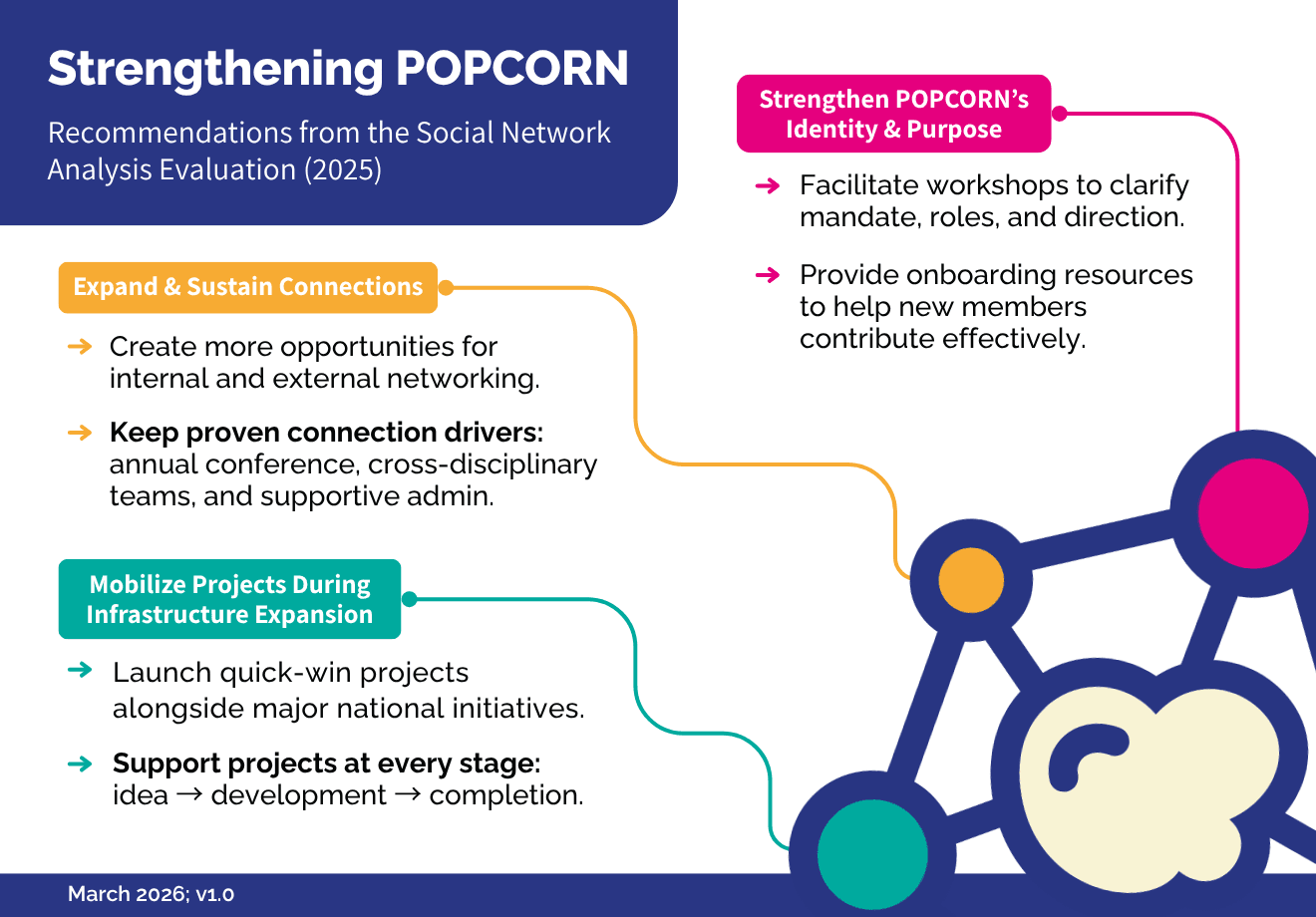
Together, these actions will help increase POPCORN’s impact and long-term sustainability as a national leader in pediatric research.


POPCORN — Pediatric Outcome imProvement through COordination of Research Networks
Operated via MICYRN and CHU Sainte-Justine Research Center
Funded by the Canadian Institutes of Health Research and the Canada Biomedical Research Fund
2025 Impact Report
Designed and developed by Sunny Yimeng Dong